
Body Image, Relationships & Self-Care after Weight Loss
Losing a significant amount of weight brings many changes — some exciting, some complicated, and some unexpectedly difficult. Alongside health benefits and lifestyle shifts, weight loss often reshapes how we see ourselves and how we connect with others. For many people, intimacy, sex, and dating feel different after their bodies change. Sometimes the experience is freeing; other times, it can stir up old insecurities or create new ones.
Whether you are married, single, or in the process of divorce, it’s worth pausing to consider how weight loss impacts relationships and self-image. By approaching these changes with awareness and compassion, you can navigate them in a way that feels both empowering and sustainable.
Body Image and Body Distortions
Even after significant weight loss, body image doesn’t always keep up with the reflection in the mirror. Some people continue to see their heavier selves or feel disconnected from their new body. This happens because body image is shaped more by the mind than by objective reality. You may have days when you feel “fat” and others when you feel “thin,” even though your body hasn’t changed overnight. These are distortions, not truths — and noticing them is the first step toward healing your relationship with your body.
Loose skin is another common challenge. While it can feel like a barrier to intimacy, most partners notice it far less than the person experiencing it. What matters more is how you feel in your own skin. Small steps, like choosing clothing or lingerie that makes you feel comfortable and sexy, can help bridge the gap between self-perception and partner connection (more on this below).
The Self-Critic vs. Self-Compassion
One of the biggest barriers to intimacy after weight loss is not physical — it’s the inner voice. Many people have a harsh self-critic that constantly points out perceived flaws. Becoming aware of this voice is crucial.
Try two practices:
- Disengage from negative self-talk when possible. Notice it without engaging with it.
- Practice self-compassion by speaking to yourself the way you would speak to a close friend — with truth, but also with kindness. Check out resources by researcher Dr. Kristin Neff at self-compassion.com
Over time, this shift can reduce shame and create more space for confidence and connection.
Affirmations That Heal
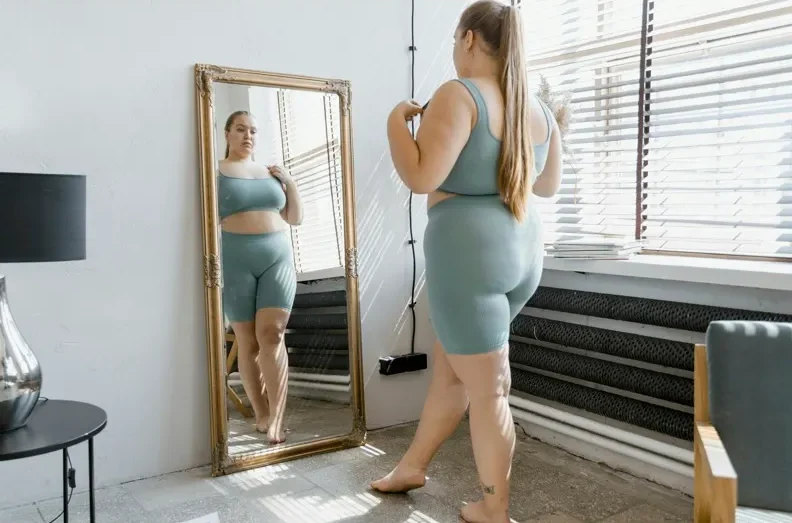
Looking in the mirror and offering yourself true affirmations may feel awkward at first, but it is a powerful practice. Don’t lie to yourself. Make sure the affirmation is true and real to you. Start small: “I appreciate my strong legs because they carry me every day.”
Seeing yourself as a whole person rather than breaking your body into parts can also reframe your self-image in a healthier way.
Mind-Body Practices
Meditation, mindfulness, and mindful eating can help you reconnect with your body in a gentler, more positive way. These practices invite you to be present, reduce judgment, and build trust with your body as it is now — not just how it used to be. Consistency is more important than the amount of time. Start small — 2 minutes per day 5 days per week is better than once a week for an hour. Start between 2–5 minutes a day most days per week.
Mindful eating is especially helpful. This may be surprising. Experiment and find out for yourself. Listen to music or a podcast while eating to start out more easily than sitting in silence. However, do remove television because it just takes up too many senses and distracts from eating so much that we overeat by eating mindlessly. Start small, again. Try mindful eating one meal per day and build up from there.
Movement as Medicine
Exercise isn’t only about burning calories or sculpting muscles; it’s about improving how your brain feels. Movement releases “feel-good” chemicals that enhance mood, increase self-confidence, and improve body image. Approaching movement as a way to feel alive, rather than as punishment, makes it more sustainable and enjoyable. Restorative or gentle yoga may be a good place to start by moving slowly and restoratively in connection with your body.
Looking and Feeling Your Best
Investing in clothes that fit your new body well can transform how you feel. Dressing in ways that make you feel attractive isn’t about impressing others — it’s about reinforcing your own confidence.
This is especially true of clothing before/during sexy time. Find lingerie that feels flattering and covers those areas you’re still concerned about, so you’re not too focused on them.
Seeking Support and Self-Care
Weight loss can feel isolating, but you are not alone. Seek out communities — whether in person or online — where others share their experiences. Support groups, therapy, and friendships can provide encouragement and normalize the challenges. Don’t underestimate the power of basic self-care: sleep, balanced nutrition, and hobbies that bring joy are all part of building confidence and intimacy.
Conclusion
Body image and how it relates to intimacy after weight loss can be complicated. For some, changes bring newfound freedom; for others, they stir old wounds or insecurities. Both are normal. By recognizing body image distortions, quieting the inner critic, practicing self-compassion, and building supportive relationships, you can grow into a healthier and more confident version of yourself.
And if your weight loss journey involves GLP-1 medications, remember: these drugs may change not just appetite, but also how you feel in your body and in your relationships. Be patient with yourself as you adjust. Intimacy is not about perfection — it’s about connection, presence, and embracing yourself as a whole person.
Kimberly Atwood is a licensed psychotherapist and certified sex therapist in private practice in Princeton, NJ. She specializes in sexual health, intimacy and relationship issues. For more information, please check out her website at kimatwood.com
You must be logged in to post a comment.